Blog
Standardize Substation Steel Details for Faster Fabrication
Speed shop flow with standardized detailing, hole patterns, and part marking for structural steel for substations to reduce rework and delays.
August 19, 2026 · By SteelCon Blogs · Blog
Detailing Moves That Unlock Faster Shop Flow
Detailing decisions made at your desk today decide if your substation steel shows up on time when summer heat hits and outage windows get tight. When the grid is loaded and field crews are working long days, no one has patience for missing holes or mystery parts. Structural steel for substations has to fit, and it has to fit the first time.
Poor detailing slows everything. In the shop, it means rework, extra layout, and welders waiting on answers. In the field, it means grinding, torch work, and blown outage plans while everyone hunts for a fix. Schedules slip, tempers rise, and the whole project feels harder than it should.
From our side of the table as a multi-plant fabricator, we see the same pattern again and again. Projects with clean, consistent connection details, repeatable hole patterns, and clear part marking move smoothly through our facilities. Projects that ignore those basics clog the shop right when EPC teams need us most. The good news is that better shop flow starts in the detail model, long before the first beam hits the line.
Why Fabrication Slotting Starts in the Detail Model
Fabrication slotting is simply how we organize work so beams, columns, and braced frames move through burning, drilling, welding, and galvanizing with as little waiting as possible. Think of it as a traffic plan for steel. When slotting works, pieces glide from station to station without sitting on the floor for days.
That traffic plan depends heavily on how the model is detailed. When connections jump around in size, when hole patterns are random, or when special one-off details show up on every sheet, our shop has to stop and think at each step. That slow thinking time adds up.
Consistent detailing lets us:
Preload CNC programs for standard hole tables
Set fixtures and jigs once for common connection families
Plan galvanizing loads around known part sizes and weights
Balance work across multiple facilities without reprogramming
The fastest projects usually start with early collaboration. When EPC engineering teams, detailers, and our shop sit down early, we can agree on:
Standard connection libraries that repeat across projects
Reasonable tolerances that work for fabrication and galvanizing
A short list of “no-go” details that always slow production
This is especially important when substation work ramps up before and during summer. With a shared playbook, we can absorb rush orders without turning the shop into chaos.
Connection Standardization That Shops Can Execute Fast
Not every connection in a substation structure can be standard, but a surprising amount of it can. When connection types repeat, the shop moves faster and makes fewer mistakes.
Standardized connection families might include:
Clip angles in a small, consistent set of leg sizes and thicknesses
Base plates and cap plates that share bolt patterns and thicknesses
Typical weld sizes that match shop procedures and welder habits
Structural steel for substations has many good candidates for standardization. Some of the easiest are:
Bus support structures, where similar loads and geometries repeat
Equipment stands for transformers and breakers with common layouts
Cable tray supports that follow simple, repeating frames
Other areas, like special dead-end structures or odd retrofit frames, may need more engineering flexibility. That is fine. The goal is not to force every joint into a box. The goal is to make the common details truly common and leave the custom work for where it is really needed.
At SteelCon, when connections are standardized, we spend less time answering RFIs and spend fewer minutes per piece deciding how to build it. Welders see familiar setups, fitters recognize patterns, and the lines run steadily even when the job count spikes.
Optimized Hole Patterns for Speed and Reliability
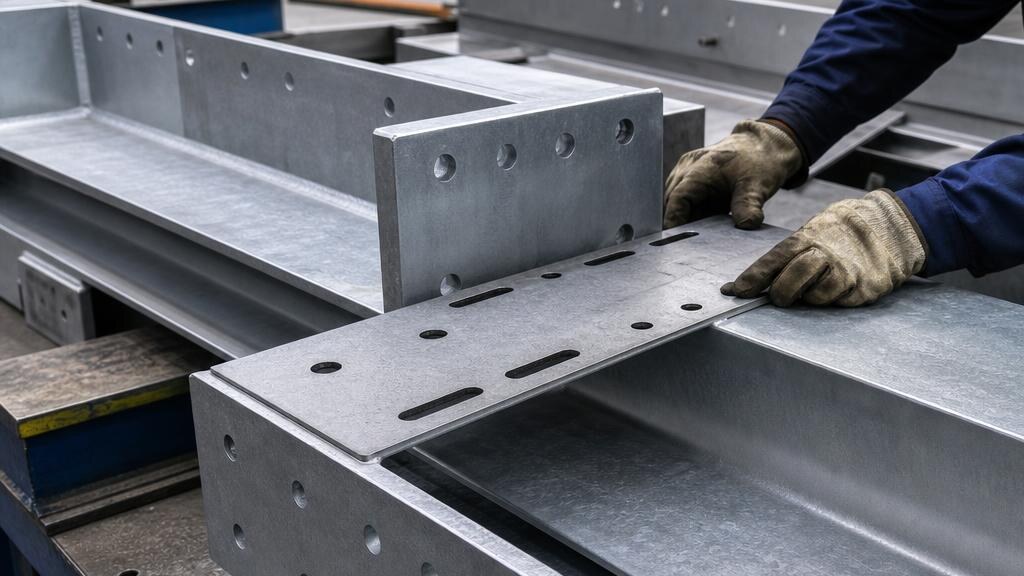
Hole patterns are one of the quiet heroes of shop flow. A thoughtful bolt layout can save hours in the shop and even more in the field, especially when multiple facilities are fabricating different parts of the same substation program.
Standard hole patterns help us:
Reuse CNC templates across projects and plants
Reduce manual programming and layout time
Train crews once on a pattern that repeats again and again
Good, constructible hole patterns usually follow a few simple rules:
Repeatable gages, so steel can be nested and drilled in families
Edge distances that stay sound after galvanizing and touch-up
A clear choice between slotted and standard holes based on field fit
For example, standard holes in one member and short slotted holes in the mating member can give field crews just enough wiggle room without turning every connection into guesswork. That matters when it is hot, bolts are expanding, and everyone is trying to finish steel before a storm rolls through.
Predictable patterns also cut down on on-site fabrication or reaming. When the holes line up, field teams can focus on safe, steady installation instead of wrestling with misfits in tough summer weather.
Part Marking and Kitting That Keep Crews Moving
Even the best-detailed steel can slow a project if no one can tell which piece is which. Part marking is how we connect the 3D model on your screen to the pile of galvanized steel on a truck in a crowded yard.
Clear, consistent marks help in two places:
In the shop, where workers sort and stage parts for coating and loading
At the substation site, where crews need to find the next piece fast
Best practices for part marking structural steel for substations usually include:
Marks that survive galvanizing, like low-profile stamps or tags
Logical sequences that match grid lines, elevations, or frame types
Labeling methods that stay legible after hauling and handling
When we combine solid part marking with smart kitting and load sequencing, the payoff is even bigger. Bundles and truckloads can be organized so that the first steel off the trailer is the first steel in the air. That tightens outage windows and helps hit energization dates more reliably, especially when the weather around the country is hot, humid, and unpredictable.
Partnering with SteelCon to Build a Detailing Playbook
The strongest substation programs usually share one thing: a clear detailing standard that everyone uses, from the engineer’s desk to the shop floor. Building that standard does not have to be complicated, but it does take a bit of upfront work.
Practical steps that work well include:
Piloting a standard connection package on a limited scope
Agreeing on preferred hole tables for common members
Running a trial project through our facilities to see where shop flow improves
As that playbook matures, schedules become more predictable, shop and field work gets smoother, and delivery capacity scales up for long-horizon power infrastructure programs. At SteelCon, our role in that process is simple. We bring the view from the shop floor and the experience of running multiple U.S. fabrication facilities so your detailing choices line up with how steel really moves.
Get Started With Your Project Today
If you are planning a new yard or upgrading aging equipment, we can help you specify and deliver the right structural steel for substations to keep your project on schedule and within scope. At SteelCon, our team works closely with utilities, EPCs, and contractors to align structural designs with real-world constructability and reliability requirements. Share your drawings, timelines, and site constraints so we can provide practical guidance and responsive support from design through installation. To start the conversation, simply contact us and we will follow up promptly with next steps.