Blog
Materials for Substation Steel Structures
Learn which steel grades, coatings, and hardware choices improve durability, fit-up, and longevity in substation steel structures for EPC schedules.
July 30, 2026 · By SteelCon Blogs · Blog
Why Substation Materials Matter for Grid Reliability
Reliable power starts with steel that quietly does its job every day. Electrical substation structures carry high-voltage equipment, buswork, and conductors in all kinds of weather, and the materials we choose directly influence how safely and predictably that grid performs over time.
When we talk about materials used in substation structures, we are not just talking about a shopping list of beams, plates, and bolts. We are talking about engineering decisions that affect clearances, deflection, corrosion resistance, construction schedules, and long-term maintenance. For EPC contractors and utilities, those decisions ripple into outage windows, permitting, and how confidently crews can build on a tight timeline.
At SteelCon, our focus on high-voltage substation steel shapes how we think about every angle, plate, and fastener. Material expertise, specification compliance, and corrosion protection are not extras for us. They are the foundation for schedule certainty and grid assets that keep performing long after the ribbon cutting is over.
Core Structural Steel for Electrical Substation Structures
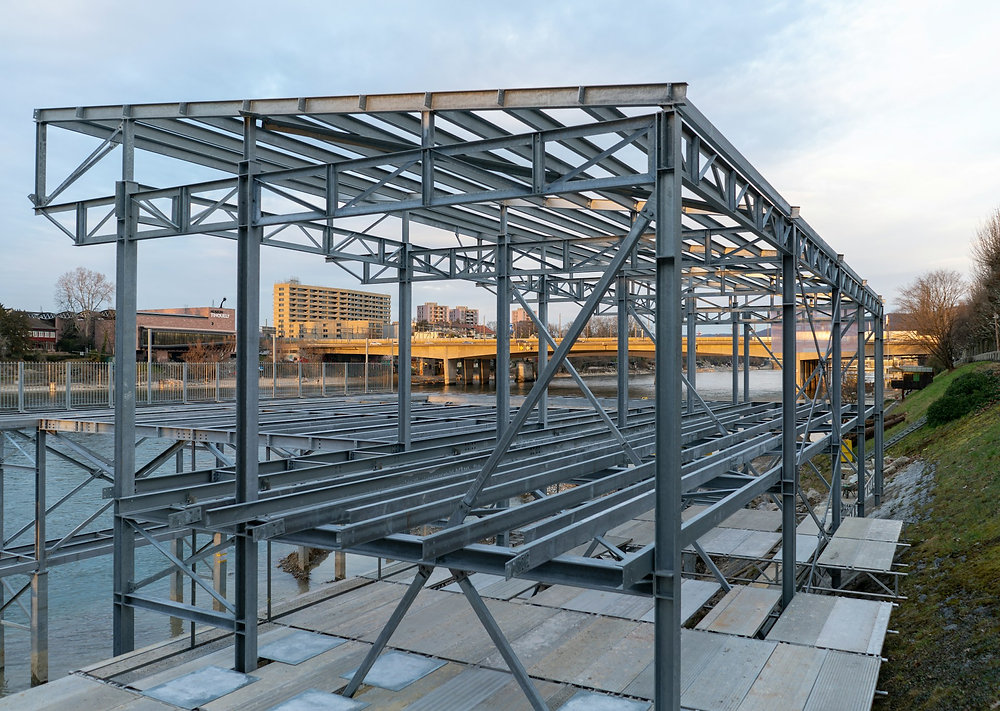
The backbone of most substation steel structures is fairly familiar: wide flange beams, channels, angles, and plate. What matters is how they are put to work.
You will typically see:
Wide flange beams carrying primary vertical loads and supporting buswork
Channels used for secondary members, cable supports, and equipment frames
Angles used for braces, minor framing, and connection clips
Plate used for base plates, gussets, splice plates, and equipment mounting
In high-voltage substation steel, properties like strength and ductility do not live in isolation. They interact with weldability, hole patterns, and field assembly. We care about:
Strength that meets project design loads with realistic safety margins
Ductility so members perform predictably under wind, ice, and seismic events
Weldability that allows consistent shop welds and sound connections
Mill certifications that confirm compliance with project specifications
For EPC teams, one of the most practical questions is not just what shape works on paper, but what shape can be procured and fabricated inside the project schedule. When we are brought in early, we can help align:
Shape selection against mill and service center availability
Alternate shapes that keep clearances and deflections within limits
Bar lengths that reduce waste and shop handling time
Roll and lead times that protect the critical path
That early coordination turns material selection into a schedule tool, not a late-stage headache.
Galvanized Substation Structures and Corrosion Protection
Most outdoor electrical substation structures in the United States rely on hot-dip galvanizing for corrosion protection. It is a practical response to rain, UV exposure, pollution, and, in many regions, deicing salts and coastal environments.
Hot-dip galvanizing covers steel with a zinc coating by immersing it in molten zinc. For the owner and EPC team, a few points matter most:
Typical coating thickness is driven by steel thickness and specification requirements
Even coverage on edges, corners, and connection details is critical
Surface prep and fabrication details strongly influence final coating quality
Good detailing supports good coatings. That means drainage and venting paths so zinc can flow in and out, avoiding trapped pockets and bare areas. It also means paying attention to welds, overlapping surfaces, and sharp re-entrant corners that can interfere with uniform zinc coverage.
Galvanizing is not the only option, but it is often the most straightforward for long-life, low-maintenance galvanized substation structures. Compared with other options:
Paint systems can work but usually demand more maintenance and careful surface prep
Duplex systems (galvanizing plus paint) can be valuable in harsher or aesthetic-driven environments
Bare steel or minimal coatings rarely fit the service life expectations of modern utilities
The right solution depends on environment, maintenance access, and how often the owner is willing to plan outages for coating touch-ups. In many cases, hot-dip galvanizing alone strikes the best balance between initial cost and life-cycle performance.
Plates, Beams, and Tubing That Stand up to Real-World Loads
Within substation steel structures, different members shoulder very different responsibilities. Plate, beams, and structural tubing all have specific roles.
Plate is the interface between structure and foundation, and between steel and electrical equipment. Common uses include:
Base plates anchoring columns to foundations
Equipment mounting plates maintaining clearances and alignment
Gusset and splice plates controlling load paths and stiffness
Details like plate thickness, flatness, and hole layout matter, because small errors in the shop turn into big headaches in the field. Tight control of:
Thickness tolerances
Hole spacing and patterns
Edge prep for welding or bolting
helps crews avoid torching, reaming, and field modifications that eat into outage windows.
Beams carry line and bus loads while holding clearances under wind and ice. When we fabricate beams for substation applications, we think beyond simple section size:
Camber and deflection limits to protect electrical insulation distances
Stiffener placement to handle concentrated loads from insulators and equipment
Connection geometry that speeds erection while maintaining capacity
Hollow structural sections and tubing bring efficiency and stiffness in compact packages, often used for bracing or specialized equipment frames. They require careful planning for galvanizing:
Adequate vent and drain holes to let zinc in and out
Thoughtful connection details so crews can bolt or weld without hidden voids
Consideration of internal corrosion if tubing is sealed without galvanizing access
Handled correctly, tubing can be a clean, efficient part of electrical substation structures, but it rewards fabricators who pay attention to the small details.
Fasteners, Connections, and Specification Compliance
Fasteners are where design intent meets reality in the field. Bolts, nuts, and washers need to match the strength and coating expectations of the structure, especially when they will be in direct contact with galvanized steel.
Key considerations include:
Strength grade compatible with connection design and utility standards
Coatings that work with galvanized surfaces without excessive galling or corrosion
Washers and hardware that distribute loads and protect coatings during tightening
Connections must also respect any vibration or dynamic loading, especially near breakers, disconnects, and bus connections. Skipping those details can lead to loose joints, noise, and maintenance calls that no one planned for.
Specification compliance is the thread that ties structural members and fasteners together into a reliable system. Owners and utilities often have very specific requirements for:
Steel grades and toughness
Galvanizing standards and testing
Fastener grades, coatings, and installation methods
At SteelCon, our engineering and quality teams treat those requirements as the baseline. We verify material certifications, check connection details, and confirm fit-up before anything leaves the shop. That approach supports safer and faster installation, because EPC field crews are not left resolving surprises with a wrench and a torch.
Material Choices That Protect Schedules and Assets
Substation steel structures are long-life assets, and material choices echo across decades. When structural steel, galvanized finishes, and fasteners are chosen and detailed with care, owners see:
Reduced corrosion and fewer coating failures
Lower maintenance demand over the structure’s service life
Fewer unplanned outages tied to structural repairs
For EPC contractors, the right materials used in substation structures create predictability. Coordinated shape selection, realistic galvanizing lead times, and compliant fasteners turn the steel package into a reliable part of the schedule rather than a source of last-minute delays.
As a U.S.-based fabricator focused on engineered, galvanized substation steel, SteelCon brings that material focus directly into every project. When material properties, corrosion protection, and specification compliance are aligned from the start, utilities and EPC teams gain something that is hard to quantify but easy to feel on site: substation steel that shows up as expected, goes together smoothly, and supports a grid that stays online.
Get Started With Your Project Today
If you are planning new substation steel structures or looking to upgrade existing assets, we can help you move from concept to installation with confidence. At SteelCon, we collaborate with your engineering and construction teams to deliver steel solutions that meet demanding technical and safety requirements. Share your project details and timelines so we can provide tailored recommendations and a clear path forward. To begin the conversation, simply contact us and we will follow up promptly.